The Man at the Helm of N.C. “Crown Jewel”
Thank you for joining us this Saturday morning.
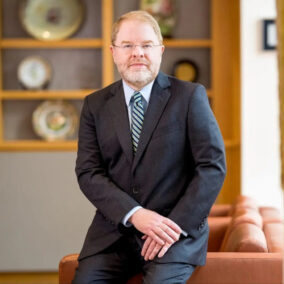
UNC System President Peter Hans has quietly reshaped the state’s public university system during his six-year tenure. From lower-profile matters like budgeting and leadership incentives to headline-grabbers like accreditation and syllabus transparency, Hans has delicately steered one of the nation’s most prominent public university systems through political and policy challenges.
Today, we explore his impact at the helm of North Carolina’s “crown jewel.”
***
Taken in isolation, each consequential decision Hans has made over the years might seem an island unto itself. After all, it’s hard at first glance to spot the connection between Project Kitty Hawk – a technology platform that helps UNC System schools better serve adult learners – and a system-wide curricular requirement to study American civics.
But all of Hans’s initiatives are in service of this throughline: The UNC System is perfectly positioned for long-term growth, stability, and insulation from political volatility. Sure, some external shock could upend everything. But of the corners that one can reasonably identify, Hans has already seen around them.
Start with finances. The UNC System, including its affiliated entities, is a $20 billion operation with more than 100,000 employees and 250,000 students across 17 campuses. Hans acted early in his tenure to modernize the internal policies and fiscal management structure to better monitor the diverse revenue and expense centers within the System and across its campuses. For example, he instituted an all-funds budget, providing campus and System leaders with clearer insights into their budgets and enabling more efficient resource allocation.
Tuition had already been flat for a few years before Hans became president. Fiscal prudence, alignment with legislative priorities, and generous allocations from the General Assembly helped maintain that streak well into Hans’s tenure for a total of nine years – one of the longest stretches of any public university system in the country. The UNC Board of Governors voted just this week to finally increase tuition, and even then by only $125. Indeed, it is still cheaper today to attend a UNC System school than it was in 2016.
On politics, Hans has a well-earned reputation as a sophisticated operator. That’s more than just a nice-to-have. The state’s public university system is by definition a creature of politics. State lawmakers appoint its governing board, and North Carolina taxpayers fund its operations. What’s more, national dust-ups have led to multiple university president firings and reputational hits at prestigious schools across the country.
Political savviness, then, is a bedrock prerequisite for any higher education leader. And Hans has it in spades.
His administration’s decisions on institutional neutrality and syllabus transparency, for example, show a keen responsiveness to the political mood of the public, not just the professor class. For years, university presidents chose to wade into political cauldrons that had no direct nexus to the university. For example, after the death of George Floyd, many universities issued statements and made so-called “antiracism” pledges. When Hamas attacked Israeli civilians three years later, those same universities invited accusations of double standards when they remained silent. These episodes, among others, ignited backlash and alienated large swaths of the very public that funds their schools.
There is no good reason for universities to embroil themselves in such controversy, and Hans’s neutrality policy wisely prevents them from doing so in the future.
A similar dynamic holds for syllabus transparency. Public funding supports public university instruction, and it stands to reason that the public ought to be able to see the short documents that describe the curriculum that taxpayers fund. But some university professors have claimed they will be “picked off one by one,” presumably by assassins, if their schedules are accessible to the public. (UNC’s own website already lists the dates, times, and course overview of the class taught by the professor who made that claim.) Hans has rightly set aside such hyperbolic claims and instituted policies based on reason.
***
Hans’s tenure has constructed a type of architecture for the System’s future. Project Kitty Hawk, all-funds budgeting, institutional neutrality, syllabus transparency, tuition restraint – viewed separately, they can look like disconnected policy tweaks. But viewed together, they form a governing philosophy that stabilizes the System’s foundation, widens its tent, and lowers the temperature.
The UNC System, after all, is an enduring institution funded by taxpayers and entrusted to educate the next generation of North Carolinians. The UNC System’s stability is the product of deliberate design.
Recent Articles
How Wake Forest University Is Serving Those Who Served
Thank you for joining us this Saturday morning. It’s fair to assume that anybody who wore the uniform of one of America’s military branches would qualify as a “veteran” under the law. But that’s not what the law says: A less-than-honorable discharge can strip a former service member of all veteran benefits, including health care,…
The Political Center Is Getting Squeezed
Good Saturday morning and thank you for joining us. With a number of primaries completed (46 by our count) we’re taking a look at some of the political trends emerging from this year’s primary season, and what they may tell us about where both parties are headed. American politics has always had its factions. We think…
Amid a Turbulent Media Environment, TRC Nexus Stands Alone
From the Desk of Mike Rusher Thank you for joining us this Saturday morning. A week ago, the Nexus team sat down to review our performance for the year and get a better sense of which topics and stories are resonating most with C-suites across the state. The timing was good: our latest TRC Nexus…