
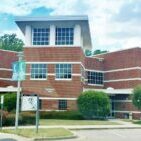
Central Carolina Community College: Training the Workforce Powering the Carolina Core
Good morning, and thank you for joining us this Saturday.
On any given weekday morning in Sanford, the future workforce of our state’s advanced-manufacturing economy is learning how to weld, wire, or calibrate.
From Wolfspeed’s semiconductor megasite in Siler City to Toyota’s battery manufacturing plant in Randolph County and all across the Piedmont Triad region, the Carolina Core’s record-setting growth depends on a skilled workforce. And Central Carolina Community College is training the backbone of that workforce.
Over the past seven years, the Carolina Core has announced more than 73,000 jobs, five projects exceeding $1 billion in investment, and 33 more topping $100 million – and these include both North Carolina’s largest capital investment ever in Toyota’s $13.9 billion battery plant, and the largest jobs announcement in state history, with more than 14,500 jobs at JetZero. The 120-mile corridor connecting Greensboro, Winston-Salem, High Point, and Fayetteville now anchors North Carolina’s position as CNBC’s No. 1 Top State for Business three times in four years, with the Carolina Core’s momentum cited as a major driver.
The story of CCCC offers a case study in return on investment, showing what steady support of public-private partnerships between local, state, academic, and business leaders can accomplish when working together.
The college’s footprint stretches across Lee, Harnett, and Chatham Counties, three communities sitting squarely within the Carolina Core corridor. As global manufacturers continue to invest billions of dollars in the region, the demand for a highly skilled, advanced-manufacturing workforce has never been higher. CCCC has become the hub for meeting this demand by combining short-term credential programs with customized training for new and expanding industries – and by partnering directly with the businesses seeking to fill these and future positions across the region.
Through these customized training programs, CCCC partners with companies like Pfizer, Bharat Forge, Mountaire Farms, Wolfspeed, and more to design site-specific training that equips workers with the skills employers need right away. In 2024 alone, CCCC reported 1,700 registrations in its customized training program, ranging from robotics and automation to biotechnology and manufacturing, safety certifications, and more.
“Communication and planning have been flawless; they are truly customer focused!” said Pfizer Facilities Manager Erik Bender. “We plan to extend our training into mechanical and apprentice programs soon while continuing to use CCCC as a primary resource.”
This kind of demand, and follow-on success of training up this advanced workforce, is part of what inspired CCCC President Dr. Lisa Chapman and her team to reimagine an old, abandoned auto-parts factory in Sanford as a state-of-the-art, advanced-manufacturing and biotechnology job training hub. The E. Eugene Moore Manufacturing and Biotech Solutions Center will be a 220,000-square-foot facility, leased from Lee County, transformed into a regional training center for career skills in advanced, technical fields. Supported by a $2 million gift from CCCC alumnus Eugene Moore, and designed in partnership with local and industry leaders, the Moore Center will house labs and workshops for welding, industrial systems, engineering and biotechnology, and more.
This fall, CCCC launched its Drive Moore Solutions Capital Campaign, the most ambitious fundraising effort in the college’s history, to raise $25 million for the Moore Center’s renovation. The public campaign began in October with an anonymous contribution of $500,000 for a matching gift challenge. Community-wide momentum from this campaign will help finalize the vision of creating a world-class hub that connects students with job skills and employers to power the region’s continued economic growth for years to come.
CCCC’s leadership role also extends across the Carolina Core region, well beyond its three-county service area. The college is also a central partner in AdvanceNC, a coalition of 12 community colleges, three universities, and seven regional workforce boards working to align training programs with the labor needs of Toyota, Wolfspeed, and other large employers in the region. Through AdvanceNC, institutions share curricula, coordinate outreach, and develop pipelines for students to enter high-demand, technical fields like those defining the dynamic workforce needs of the Carolina Core region.
This program is part of a transformation within North Carolina’s 58-institution community college system, which delivers a significant return on taxpayer investment, at $1.90 for every $1.00 spent. The system serves over 630,000 students and supports 320,000 jobs across the state.
Other partnership initiatives such as North Carolina State University’s Wolfpack Connect, guaranteeing qualified community college graduates admission to NC State, further strengthen the workforce pipeline from technical training to four-year college degrees to leadership roles within many of the targeted, high-growth industries in the region and across the state.
Central Carolina Community College’s model stands out as proof of what sustained investment can yield. For all of the billions of dollars spent on megasites, the Carolina Core’s future depends just as much on the classrooms where our state’s next-generation workforce learns to build, repair, and innovate as North Carolina continues to lead the nation and the world in advanced manufacturing growth.
Recent Articles
How Wake Forest University Is Serving Those Who Served
Thank you for joining us this Saturday morning. It’s fair to assume that anybody who wore the uniform of one of America’s military branches would qualify as a “veteran” under the law. But that’s not what the law says: A less-than-honorable discharge can strip a former service member of all veteran benefits, including health care,…
The Political Center Is Getting Squeezed
Good Saturday morning and thank you for joining us. With a number of primaries completed (46 by our count) we’re taking a look at some of the political trends emerging from this year’s primary season, and what they may tell us about where both parties are headed. American politics has always had its factions. We think…
Amid a Turbulent Media Environment, TRC Nexus Stands Alone
From the Desk of Mike Rusher Thank you for joining us this Saturday morning. A week ago, the Nexus team sat down to review our performance for the year and get a better sense of which topics and stories are resonating most with C-suites across the state. The timing was good: our latest TRC Nexus…